Watch the work, not the process document.
Process documents describe how work was meant to happen. Observation shows how it actually does, including the parts nobody thinks to mention.
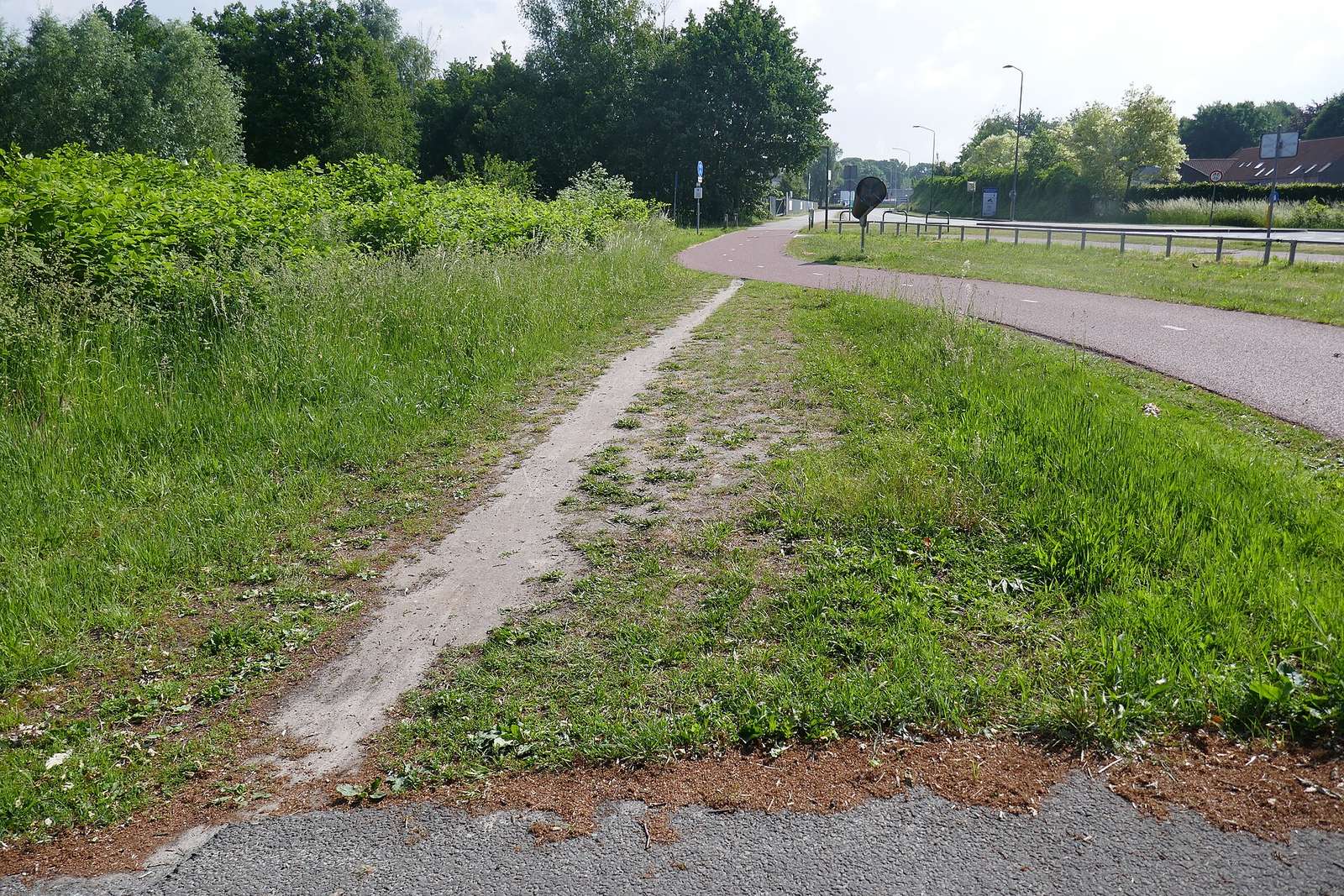
When a company decides to automate a process, the first step is usually a workshop. The people involved gather in a room, someone draws boxes and arrows on a whiteboard, and the result becomes the process map the project is built on.
The map is always wrong. Usually not badly wrong, but wrong in ways that matter.
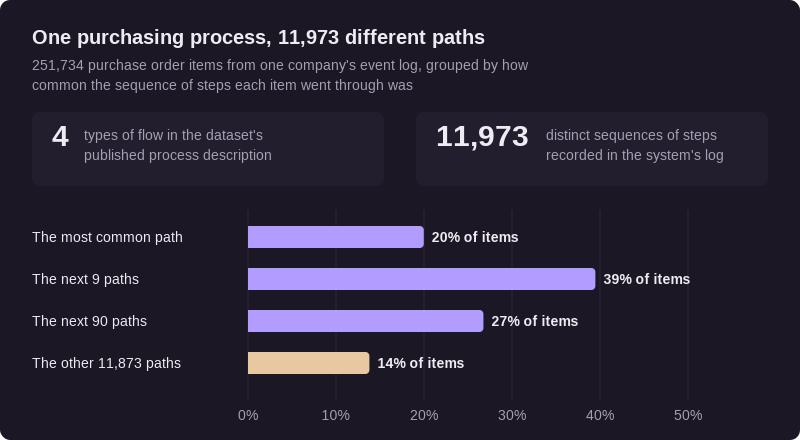
It’s wrong because people describe work the way it’s supposed to go. They skip the workaround they’ve done so many times they no longer notice it. They forget the exception that comes up once a month. They describe the official tool and leave out the spreadsheet they keep beside it. Nobody is lying. Expertise simply becomes invisible to the expert. The gap can be large: as The Register reported in March 2025, when the drugmaker GSK ran a process-mining project, it found around 28,000 different variations of its process for running a sales order.
Observation doesn’t have that problem. When you follow work in the tools people use, you see what they actually do: the screens they open and in what order, the data they copy from one place to another, the fields they check before saving, the moment they stop and phone someone. Software makes this more precise than it sounds. Every page, every click and every request between the browser and the server is an exact record of a step in the work.
That record answers questions a workshop can’t. Which steps happen every time, and which only sometimes? Where does data get re-typed between systems? Which screens are used daily, and which haven’t been opened in a year? What does the old application actually check when someone presses save?
Observation has limits, and it pays to be honest about them.
It shows what people do, not why. A planner who moves an order to tomorrow is making a judgment, and the reason (a customer who can wait, a material that arrives tonight) usually isn’t on the screen. So observation needs conversation alongside it: asking the person, at the right moment, what they were deciding and why. Done well, that takes minutes rather than workshops, and it’s anchored in a real case instead of a hypothetical one.
It only sees what happens while you’re watching. Two weeks of observation will miss the month-end close, the quarterly report and the annual renewal. You have to ask about periodic work up front, plan observation to cover the next month-end, and use the systems’ own logs to look further back.
It needs consent. People should know they are being observed, what is recorded and what isn’t, and how it will be used. Observation is a way to learn from people’s expertise, not to monitor them, and it has to be set up that way from the start.
With those limits handled, the combination is powerful. Observation gives you the facts of the work. Conversation gives you the reasons. Documents give you the official version to compare against. Together they produce a description of the work far closer to reality than any whiteboard. Large companies are starting to look before they rebuild: as The Register reported in February 2026, Mondelēz is using process mining to see how its fragmented processes actually run while it moves off its old SAP system.
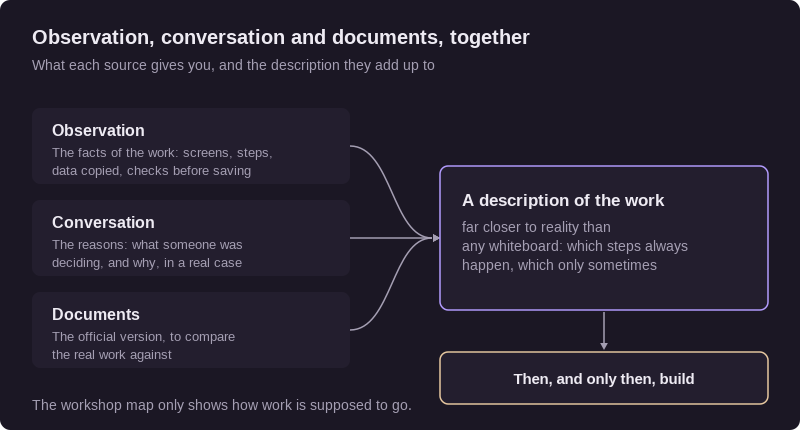
Then, and only then, is it worth building anything.